v0, Bolt.new, Lovable and HeroMate can all help you ship a working web app, not just a screenshot. v0 builds full-stack Next.js apps with integrations, Bolt Cloud includes database, auth and hosting, and Lovable offers a built-in cloud backend or a Supabase connection. HeroMate's distinct route is to let the coding agent you already use and a visual Studio build on the same platform, then use selected app capabilities through your Mate after launch.
The choice is about your preferred workflow and how you want to operate the app, not a simple "frontend versus backend" divide.
v0, Bolt.new and Lovable start in their own browser workspaces. v0 also supports opening a pull request, Bolt can connect to source control, and Lovable supports two-way GitHub sync. The question is where you want the main building loop to live.
With HeroMate, a developer can keep the build loop in Cursor, Claude Code, Codex or another compatible client and operate the platform through MCP from their own repo. A teammate can use HeroMate Studio on the same project. That pairing matters when the team has both code-first and visual builders.
Lovable provides Lovable Cloud database, authentication, storage and functions, with Supabase also available as an option.
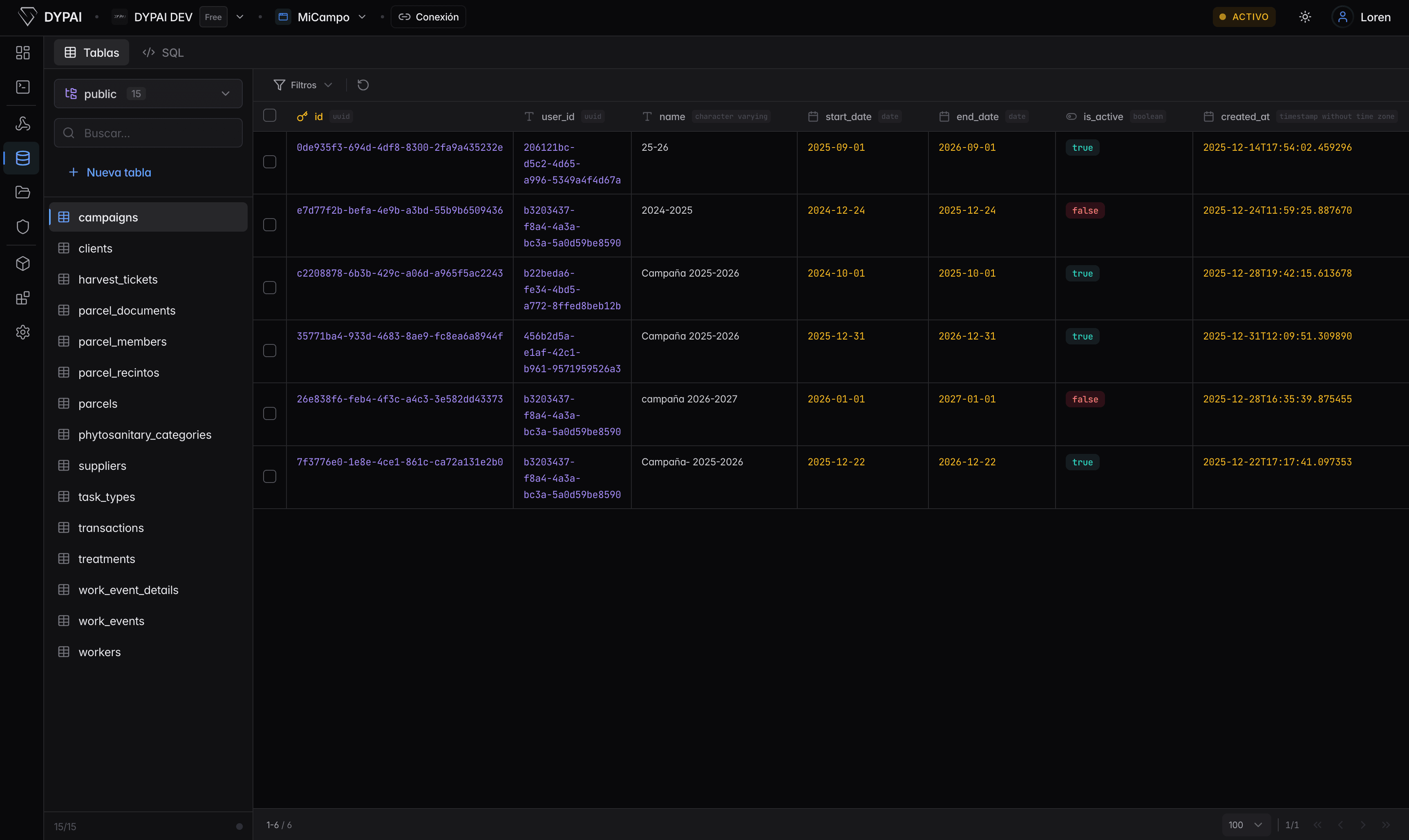
HeroMate provides Postgres, built-in auth, storage, frontend hosting and a workflow engine with branching and multiple trigger types.
All four can supply a backend path. HeroMate's advantage for a team already using coding agents is that platform operations and declarative flows can be managed from that agent while a non-technical teammate works in Studio.
Each platform can implement backend logic: v0 generates server routes, Bolt exposes edge functions, and Lovable Cloud has serverless functions. HeroMate's more specific strength is its declarative flow model for multi-step business processes, with branches, guards and triggers represented as one deployed flow.
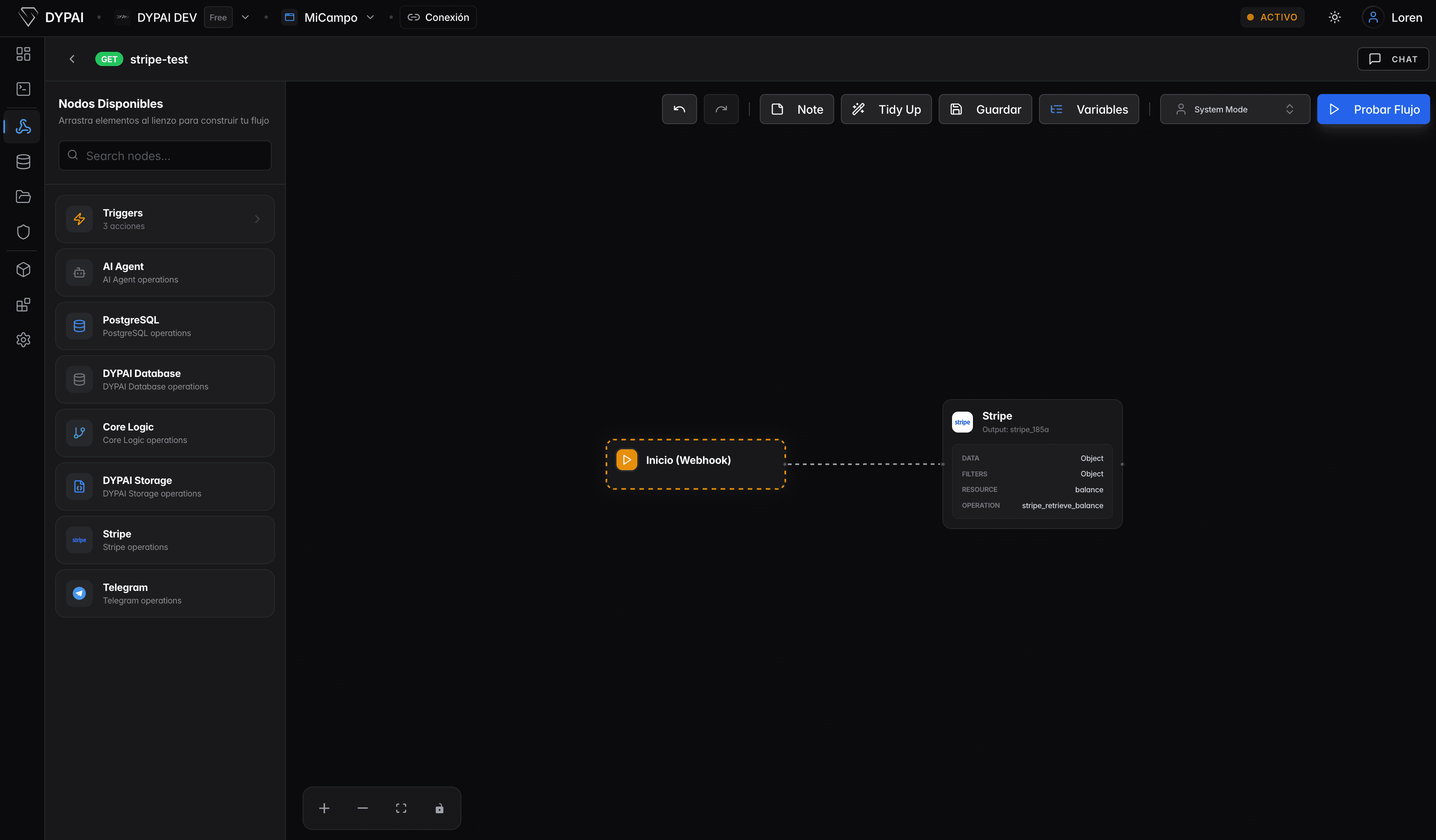
HeroMate's flows (dypai/flows/*.flow.ts) are a real orchestration layer, not just endpoint scaffolding. Concretely, the flow builder gives you .when()/.match() for actual if/else and switch-style branching — each branch resolves its own response — .guard() for early-exit validation, and .agent() to drop an AI agent step directly inside the flow, not just at the chat layer in front of it. A flow can trigger from an HTTP request, a webhook, or a cron schedule, use built-in integration nodes for Stripe, WhatsApp, Telegram, Slack or Google Sheets along the way, and can itself be exposed as a tool for an in-app agent.
For a booking app, that could mean checking availability, branching when a slot is taken and sending a follow-up through an integration as one flow. After publication, an endpoint deliberately made operable can also be discovered and used by your Mate, within the app's permissions and confirmation rules. That is a concrete way to keep working with the app beyond generating its first version.
Choose v0 if your team builds in Next.js and Vercel. Choose Bolt for its browser-based development environment and integrated cloud. Choose Lovable if its visual build and editing workflow fits your team, with Lovable Cloud or Supabase behind the app.
Choose HeroMate if you want an existing coding agent and a non-technical teammate to build on the same project, express business processes as flows, and let your Mate use selected live-app capabilities. Connect your agent or see the Studio tutorial.
For how the rest of the category — InsForge, Base44, Replit Agent — stacks up too, see the full 2026 roundup.